The Pours Nobody's Counting: How Complimentary Drinks Are Quietly Eating Your Bar's Profits

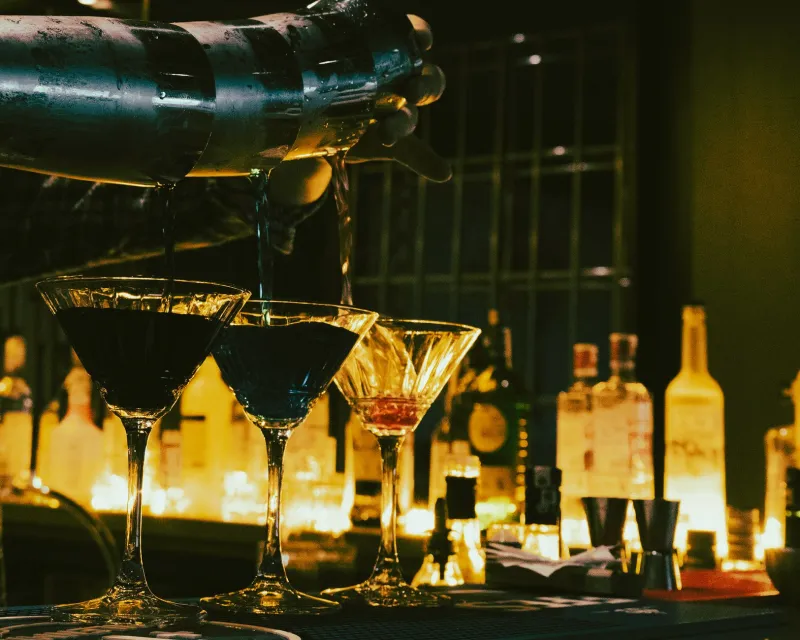
Photo by Photo by Jahanzeb Ahsan on Unsplash on Unsplash
You've done the math on your pour cost. You've tightened up your jigger discipline. You've audited your well spirits and renegotiated your distributor pricing. And yet, at the end of the month, your numbers still don't quite add up. The variance is there — stubborn, unexplained, maddening.
Here's a question worth sitting with: how many drinks left your bar last week that never touched your POS?
Not stolen. Not spilled. Just... poured. A taste for the curious guest asking about your amaro selection. A shift drink for the closer. A sample of the new bourbon your rep dropped off. A comp for the regular whose order came out wrong. Individually, these moments feel like good hospitality. Collectively, they can represent thousands of dollars in unaccounted product every single month.
This is what the industry quietly calls ghost inventory — and it's haunting bars of every size and price point across the country.
What Counts as a Ghost Pour?
Before you can fix the problem, you need to understand its shape. Ghost pours fall into a few distinct categories, and each one carries its own risk profile.
Staff training tastings are probably the most defensible — and the most abused. When you're onboarding new staff or rolling out a seasonal menu, having your team taste through the cocktail list isn't a luxury, it's a necessity. Bartenders who've never actually tasted the Aperol spritz they're selling aren't going to sell it well. But "training" can become a loose label that covers a lot of casual pouring that has nothing to do with education.
Customer samples are a real sales tool. Offering a small pour of an unfamiliar whiskey before a guest commits to a full glass can absolutely convert to a sale. But without any tracking system, it's impossible to know whether your team is using samples strategically or just being generous because it's a slow Tuesday.
Comp drinks are the trickiest category. Comping a drink for a legitimate service failure is good business. Comping drinks for friends, for regulars you want to impress, or just because someone seemed cool — that's a different story. Most bars have a comp policy on paper. Far fewer have one that's actually enforced with data.
Shift drinks and employee tastings round out the picture. Many bars offer a shift drink as part of their compensation culture, which is fine — but only if it's budgeted for and tracked. When shift drinks are informal and unlimited, the cost can spiral fast, especially in high-volume operations.
What the Numbers Actually Look Like
Let's put some rough math on this. Say your bar does $30,000 in monthly revenue. Industry estimates suggest that untracked pours — across all the categories above — can represent anywhere from 3% to 8% of total sales at bars without active tracking systems. That's $900 to $2,400 per month evaporating before you even count spillage or over-pouring.
Annualize that, and you're looking at a potential $10,000 to $28,000 hole in your operation. That's a part-time hire. That's a full menu refresh. That's a significant chunk of your rent.
The frustrating part? Most of those pours felt justified in the moment. That's what makes ghost inventory so hard to address — it's not malicious, it's cultural.
Running a Tasting Audit
The first step toward control is visibility. You can't manage what you can't measure, and right now, most bars are operating completely blind on complimentary pours.
Start with a simple 30-day audit. Create a physical or digital log — even a shared Google Sheet works — where staff are required to record every pour that doesn't generate a POS ticket. Include the product, the quantity, the reason (training, sample, comp, shift drink), and the staff member responsible. Don't frame this as a surveillance exercise. Frame it as a financial health check, because that's exactly what it is.
After 30 days, categorize what you find. You'll almost certainly discover that the vast majority of untracked pours fall into just two or three recurring patterns. Those patterns are your starting point for building policy.
Setting a Realistic Tasting Budget
Here's a mindset shift that can make this whole conversation easier: stop treating tastings and samples as losses and start treating them as a line item.
Set a monthly tasting budget — expressed in dollar value, not drink count — and make it a real number that appears in your P&L. A reasonable benchmark for most full-service bars is somewhere between 1% and 2% of monthly beverage sales. For a $30,000/month operation, that's $300 to $600 allocated intentionally for education and hospitality.
When that budget has a number attached to it, it becomes a management tool instead of a vague cultural habit. Your bar manager can make real decisions: do we use this month's tasting budget on the new staff orientation, or do we save some of it for the rep tasting next week?
Distributor and rep samples deserve special attention here. When a rep drops off product for your team to try, that's a legitimate business expense — but it should still be logged. Knowing which products your team has been trained on, and when, is valuable information for your menu development process.
Tech That Can Help
Several modern bar management platforms have started addressing this problem directly. Systems like BinWise, Bevchek, and MarketMan offer inventory reconciliation tools that can flag variance between what was ordered, what was received, and what was rung through the POS. When variance shows up consistently in specific product categories, that's a signal worth investigating.
Some POS systems — Square for Restaurants, Toast, and others — allow you to create a "comp" or "void" tracking category that requires a manager code and a reason code before the transaction is closed. This doesn't eliminate the behavior, but it creates a data trail. Over time, that data tells you whether your comp culture is a strategic hospitality tool or just a habit no one's questioned.
For staff drinks specifically, a few operators have had success with a simple token or ticket system. Each employee gets a set number of shift drink tokens per period, redeemable for specific products at a designated time. It feels fair, it maintains the culture, and it caps the exposure.
Making It a Culture Conversation, Not a Crackdown
The most important thing to get right here is the framing. If you walk into a staff meeting and announce that you're cracking down on free drinks, you're going to get defensive reactions and a morale hit. If you walk in and say "we're building systems so this bar can stay profitable and keep everyone employed," you're having a completely different conversation.
The best bar operators treat their team as stakeholders in the business's financial health. When bartenders understand that ghost pours affect their tip pool, their hours, and the long-term viability of the place they work — most of them care. They're not trying to hurt the business. They just haven't been given the context to understand the impact.
Building a tasting culture that's intentional, budgeted, and logged isn't about distrust. It's about running a tighter ship so you can afford to keep doing the things that make your bar worth working at — and worth coming back to.
The pours nobody's counting are the ones that'll catch up with you eventually. Start counting them now.